If you’ve ever driven past an LNG vaporization station and seen a tiny, whirring unit tucked away near the big storage tanks, odds are good that thing’s there to handle odorization. Let me start by breaking this down like I would when explaining it to a new plant operator—no stuffy jargon, just real-world stuff I’ve seen over the years as an LNG vaporization station supplier. First, you might be wondering: why does LNG even need odorization? I mean, natural gas that’s used in homes has that distinct rotten-egg smell, right? LNG is just liquefied natural gas, so when it’s cold (like -260°F cold), it’s odorless to begin with. If there’s a leak, you’d never smell it until it vaporizes and mixes with air—way too late to react. That’s where odorization comes in, and it’s not just dumping a bottle of stinky stuff into the LNG line. At our stations, we’ve built our systems to make this process smooth, safe, and totally reliable. LNG Vaporization Station

Let’s talk about what LNG odorant actually is. Most of the time, we use mercaptans—specifically tert-butyl mercaptan (TBM) or tetrahydrothiophene (THT). TBM is super common because it’s really pungent; you can smell it in concentrations as low as 0.5 parts per million, which is exactly what regulators require (in the U.S., that’s 1/4 of 1% of the Lower Explosive Limit, for reference). THT is a bit less smelly but works well too, depending on the site’s needs. We work with our clients to pick the right one because some places have older detection systems that are calibrated for one or the other, and we don’t want to mess with that.
Now, the process at a vaporization station. First, we have to remember that LNG is a cryogenic liquid, so if you add odorant directly to the liquid, something weird happens—most mercaptans won’t dissolve well in cold LNG, right? They’ll either sink to the bottom of the tank or stay as a separate layer, which means when the LNG vaporizes, you won’t get an even distribution of the odorant. That’s a big no-no. So our system adds the odorant at the vaporizer outlet, not before. Wait, let me explain that step by step. LNG comes from the storage tanks, goes through vaporizers (most of the time, ambient air vaporizers for smaller stations, or open rack vaporizers for larger ones), and as it turns back into natural gas at around 60°F, that’s when we inject the odorant. The gas is warm enough that the mercaptan mixes perfectly—no layering, no dead spots. That’s a key design choice we made early on, after a client had a bad experience with a system that added odorant to the liquid LNG and ended up with inconsistent smell levels at their delivery points.
Next, how do we control the amount of odorant added? Regulators are strict about this—you can’t add too little (no smell if there’s a leak) or too much (it can cause issues with gas appliances, like clogging burners or making the smell unbearable for residents nearby). Our systems use a skid-mounted odorizer that’s calibrated to the flow rate of the natural gas. So if the station is running at 1 million cubic feet per hour, the odorizer pumps in the right amount (again, around 0.5 ppm) automatically. We use mass flow sensors to track the gas flow in real-time, and the odorizer adjusts its rate based on that. We’ve built in redundancies, too—if the main flow sensor goes out, a backup kicks in, and operators get an alert on their HMI (human-machine interface) screen before there’s any problem. No one wants a station that shuts down because of a small sensor glitch.
Wait, what about cold weather? I’ve had clients in places like Alaska or Minnesota ask us if our odorization systems work when it’s -20°F outside. The vaporizer part is insulated, and the odorizer skid is heated slightly so the mercaptan stays in a liquid state, ready to be pumped into the gas line. The injection point is at the vaporizer outlet, which is already warm, so even on super cold days, the odorant mixes immediately. We tested this at a station in North Dakota a couple years ago—they had a stretch of 3 weeks at -25°F, and their odor system never dropped below 0.4 ppm, which is still above the minimum requirement. That’s the kind of real-world testing we do, not just lab numbers.
Another thing we deal with is odorant storage. Mercaptans are flammable, and they’re pretty corrosive too. So we don’t store them in regular steel drums—we use specially designed steel tanks that are lined or made of corrosion-resistant material, like HDPE for smaller sites. The storage tanks are vented properly, of course, because they’re holding a volatile chemical, but not in a way that lets the smell escape into the atmosphere. We also install leak detectors near the odorant storage area, same as we do near the LNG tanks. If there’s a mercaptan leak, the detector goes off, and the system shuts down the odorizer automatically—no need for operators to run out and check in the cold dark.
Wait, I should mention compliance. This isn’t something we just guess at. Every station we build has odorization systems that meet local, state, and federal regulations. In the U.S., that’s the Pipeline and Hazardous Materials Safety Administration (PHMSA), and in other countries, it’s their equivalent agencies. We build our systems to exceed those standards, actually, because we’d rather a client have something that’s over-safe than have to go back and fix mistakes. For example, PHMSA requires that odorant levels are tested regularly, so our systems have built-in sample ports that let operators easily take a gas sample and check the concentration with a portable meter. We even include monthly calibration checks as part of our service package, so the client never has to worry about missing a test.
Let me talk about a recent project to make this concrete. A mid-sized LNG station in Ohio came to us last year, saying their old odor system was outdated—they were adding odorant to the liquid LNG, and sometimes parts of the delivery pipeline had no smell at all. They’d had a scare when a small leak went undetected for a few hours until a homeowner complained about a weird smell (turns out, it was not natural gas, but still a close call). We replaced their whole odorization skid, moving the injection point to the vaporizer outlet, adding a flow-based control system, and installing remote monitoring. Six months later, their operator told us they’ve had zero odor level issues, and the leak tests they do weekly all come back clear. That’s the kind of win we pride ourselves on—solving real problems, not just selling parts.
Now, what about common mistakes we see other suppliers make? Some places try to cut costs by using a basic pump instead of a mass flow-controlled system. What happens then? If the station’s gas flow increases (like in the winter, when everyone’s using more heat), the amount of odorant stays the same, so the concentration drops. That’s dangerous. Or they use cheap odorant tanks that aren’t properly vented, leading to pressure buildup and a potential leak. We never do that—every component in our odorization systems is sized for the station’s maximum capacity, and all pressure relief points are tested multiple times before delivery.
Another question I get all the time: can we add odorant and inject it at the same time as other additives? Like, sometimes stations need to add chemicals to prevent pipeline corrosion. The short answer is, it depends on the chemical, but most of the time, our odorization system works with other injection points. We coordinate with the client’s process engineers to make sure the additives mix properly and don’t react with each other. We did a project in Texas where a station needed to add both odorant and a corrosion inhibitor, and we installed two separate skids that run parallel to each other, so no cross-contamination. That’s the kind of custom work we do—we don’t do one-size-fits-all.
Wait, let’s circle back to why this is all so important. LNG vaporization stations are the link between the big LNG storage facilities and the end users—homes, businesses, power plants. If the natural gas coming out of our station isn’t properly odorized, there’s a risk of leaks going undetected, which can lead to fires, explosions, or worse. We don’t take that lightly. Our job as a supplier isn’t just to build a vaporization station—it’s to make sure every part, including odorization, works so our clients can run their stations safely, comply with rules, and keep their customers happy.
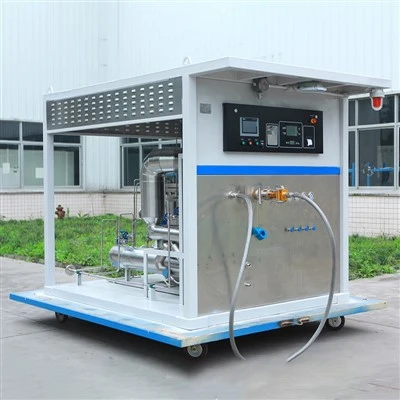
Let me wrap this up. Odorization at an LNG vaporization station isn’t just a box to check on a spec sheet. It’s a critical safety step that requires careful planning, the right components, and real-world testing. From choosing the right mercaptan to adding it at the correct point after vaporization, from using flow control systems to keeping the odorant stored safely, every detail matters. If you’re in the market for an LNG vaporization station, especially one with reliable odorization, we’ve got the experience to build something that fits your needs. We don’t do generic systems—we work with you every step of the way to make sure the odorization part, and all the other parts, work seamlessly. We’ve been in this game long enough to know what works, what doesn’t, and how to avoid the mistakes that get other teams in trouble. If you want to talk more about odorization, or the whole vaporization station package, reach out to our team. We’re happy to answer your questions, walk through our process, or even share case studies from projects like the one in Ohio or North Dakota. At the end of the day, safety is non-negotiable, and we build our systems to keep that front and center.
Cryogenic Storage Tank References
American Gas Association. (2020). LNG Odorization Best Practices. AGA Publication 1220.
Pipeline and Hazardous Materials Safety Administration. (2021). Safety Standards for Odorization of Natural Gas. PHMSA CFR Title 49, Part 192.
International Organization for Standardization. (2019). LNG Supply Chain Safety Management. ISO 13623:2019.
National Fire Protection Association. (2022). Standard for the Storage and Handling of Liquefied Natural Gas (LNG). NFPA 59A.
Chengdu Hi-tech Panda Energy Technology Co., Ltd.
With abundant experience, we are one of the most professional LNG vaporization station manufacturers in China. Please feel free to buy high quality LNG vaporization station for sale here from our factory. Also, customized service is available.
Address: No.1604, 16th Floor, Unit 2, Building 1, No.1700, North Section of Tianfu Avenue, Chengdu High-tech Zone, China (Sichuan) Pilot Free Trade Zone
E-mail: Haikepanda-sos@aliyun.com
WebSite: https://www.haike-energe.com/
